

The other day, my dad asked me a question: “can plants get cancer?” He followed the question up by saying that if plants don’t get cancer, then we could research how they prevent it so that we could replicate the process in humans. My gut reaction was that plants do get cancer. Plants also have cells, so they must experience errors in cell replication just as we do. But I had never heard of a plant getting cancer before, so I decided to look into it.
As it turns out, plants can suffer from tumors, but not exactly what we would call cancer. For example, the bacterium Agrobacterium tumefaciens can cause uncontrolled cell division resulting in bulges called crown galls.
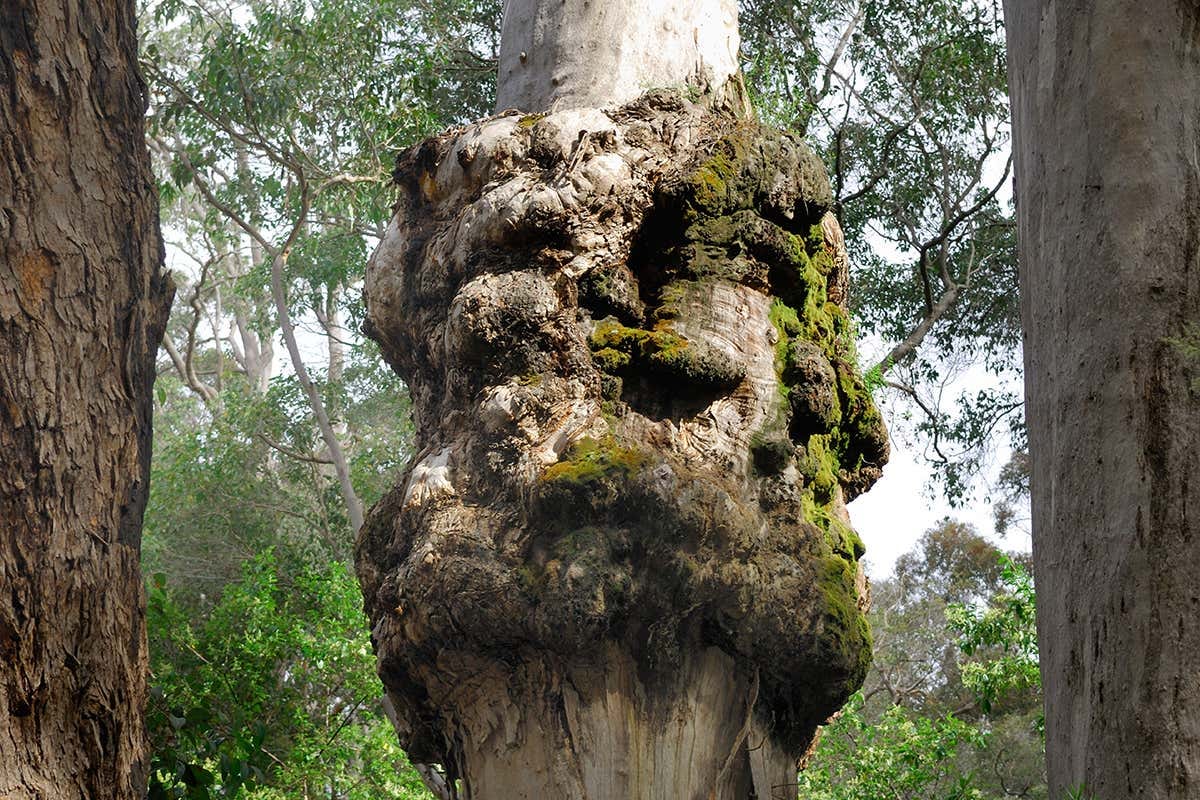
Interestingly, tumors are less deadly for plants than they are for animals. This is because plant cells have a cell wall. The cell wall is fairly rigid and allows for strong adhesions between cells. Even if a tumor does form, the cell wall prevents it from migrating. Thus, even though plants can get tumors, they rarely get malignant ones.
Additionally, in humans, cancer often spreads by traveling through the bloodstream. Plants don’t have a circulatory system like our bloodstream and instead use fluids such as sap to spread nutrients. Since sap does not have cells, tumor growths in plants cannot easily spread.
Studying how plant cells prevent cancer can help to improve understanding of cancer in humans. While we don’t have a cell wall, a 2023 paper by Thibault Leroy supports the conclusion that trees are more likely to experience mutations as they age rather than from increased cell division. Understanding how plants protect against mutations can allow scientists to utilize those methods in humans.