

In early 2025, Nguyen et al. published a paper exploring what would happen if adipocytes, fat storage cells, engineered to use increased amounts of glucose and fatty acids were introduced to the tumor microenvironment (TME). The result was that the adipocytes outcompeted the tumor.
The TME refers to the area around and including a tumor. This microenvironment includes tumor cells, non-cancerous cells, blood vessels, stromal cells, immune cells, and extracellular macromolecules. This environment lacks oxygen and is extremely acidic, so the TME promotes blood vessel creation to prevent tumor death and immune cells in the TME both enhance and fight tumorigenesis.
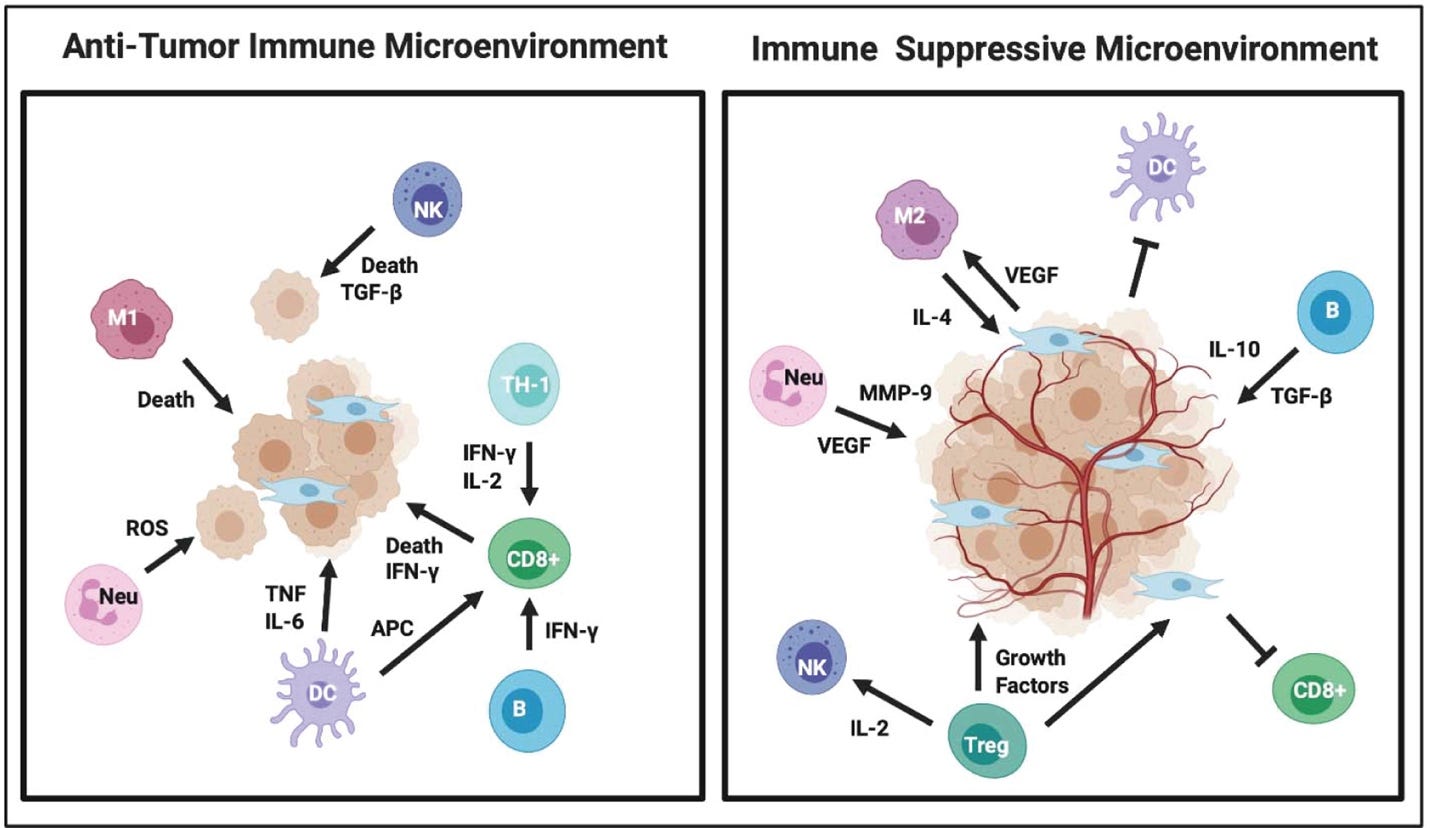
The hypoxic and acidic nature of the TME means that tumors constantly need to fight for resources. The researchers extracted human white adipose tissue (WAT) for in vitro studies because these cells are easily extracted via liposuction. Then, UCP1-CRISPR and doxycycline (which allows for reversable gene activation) was used to activate these cells, making them more similar to beige adipose tissue which can convert energy to heat. This increases the metabolic rate of the WAT tissue, allowing it to suppress tumors via competition for glucose and fatty acids. These modified cells were observed with breast, colon, pancreatic, and prostate cancer cells and the modified WAT tissue was shown to suppress cancer proliferation and reduce the tumor’s ability for glucose uptake. The below image shows the difference in tumor size between a control tumor and tumors injected with UCP1-CRISPR WAT tissue.

The modified WAT tissue was then implanted into breast cancer and pancreatic cancer mouse models, and the tumor suppressive properties were maintained. The breast cancer mouse model also demonstrated that the WAT tissue could be placed at the center of the tumor and farther from the tumor with no effect on the results. This distal placement of the WAT tissue implies that if CRISPR modified white adipose tissue becomes a viable cancer treatment option, implantation will not necessarily depend on how accessible the tumor is via surgery.
It is important to note that more research must be done into how the WAT cells interact with healthy cells around the tumor. Although doxycycline allows for a reversable treatment, future studies must address long term effects before this could become a treatment option. Still, adipocyte implantation proposes a method of fighting tumors indirectly through the TME and will hopefully become more promising as more research is done.
Works Cited
Anderson, Nicole M, and M Celeste Simon. “The tumor microenvironment.” Current biology : CB vol. 30,16 (2020): R921-R925. doi:10.1016/j.cub.2020.06.081
Nguyen, H.P., An, K., Ito, Y. et al. Implantation of engineered adipocytes suppresses tumor progression in cancer models. Nat Biotechnol 43, 1979–1995 (2025). https://doi.org/10.1038/s41587-024-02551-2