

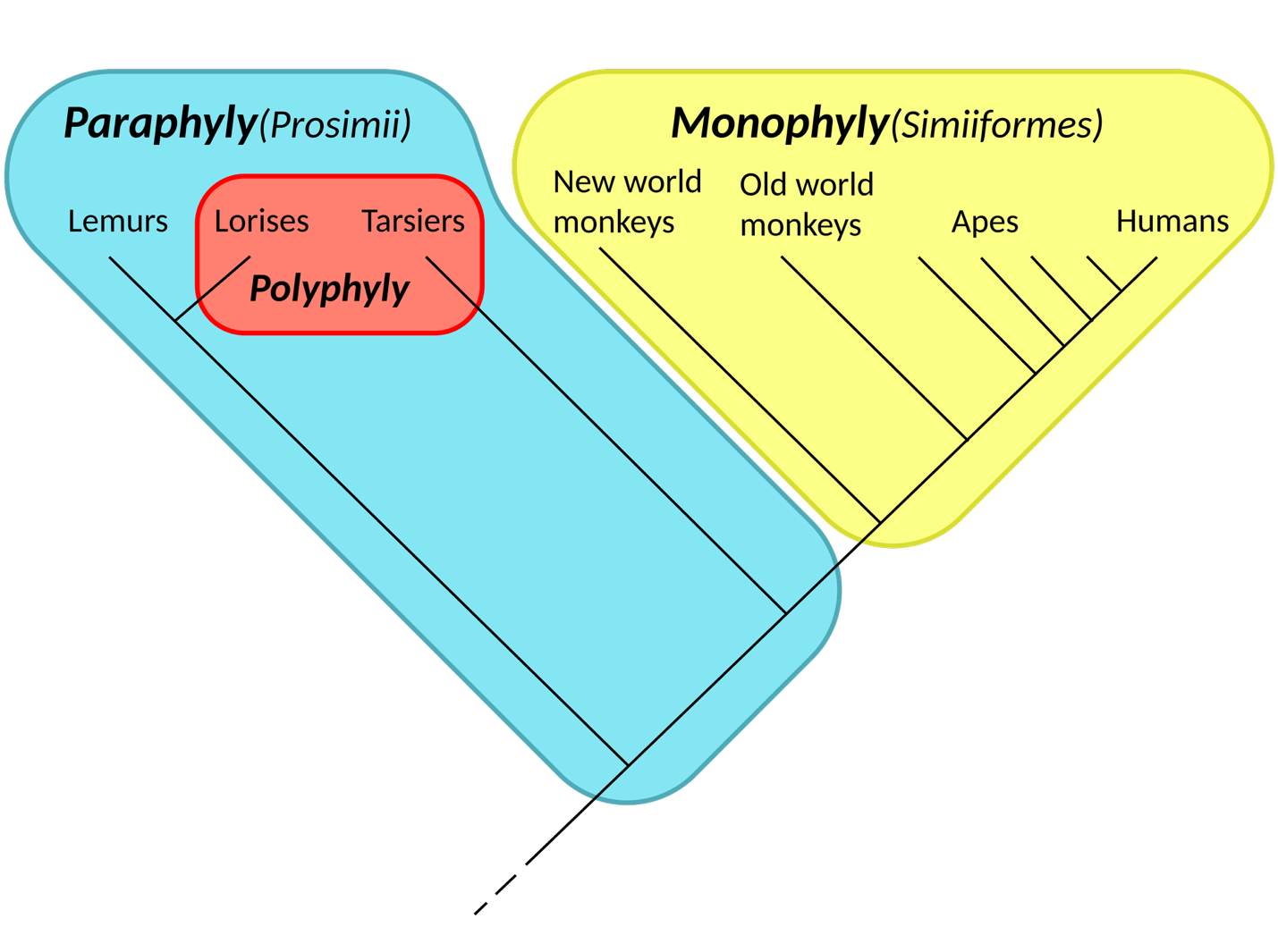
Phylogeny is the study of evolutionary relationships and lines of descent between organisms. Phylogeny is used to build an evolutionary tree. The branches of this tree can be organized into different groups. Monophyletic groups are an ancestor and all of its descendants, paraphyletic groups include an ancestor and some of its descendants, and polyphyletic groups classify organisms together without including their most recent shared common ancestor.
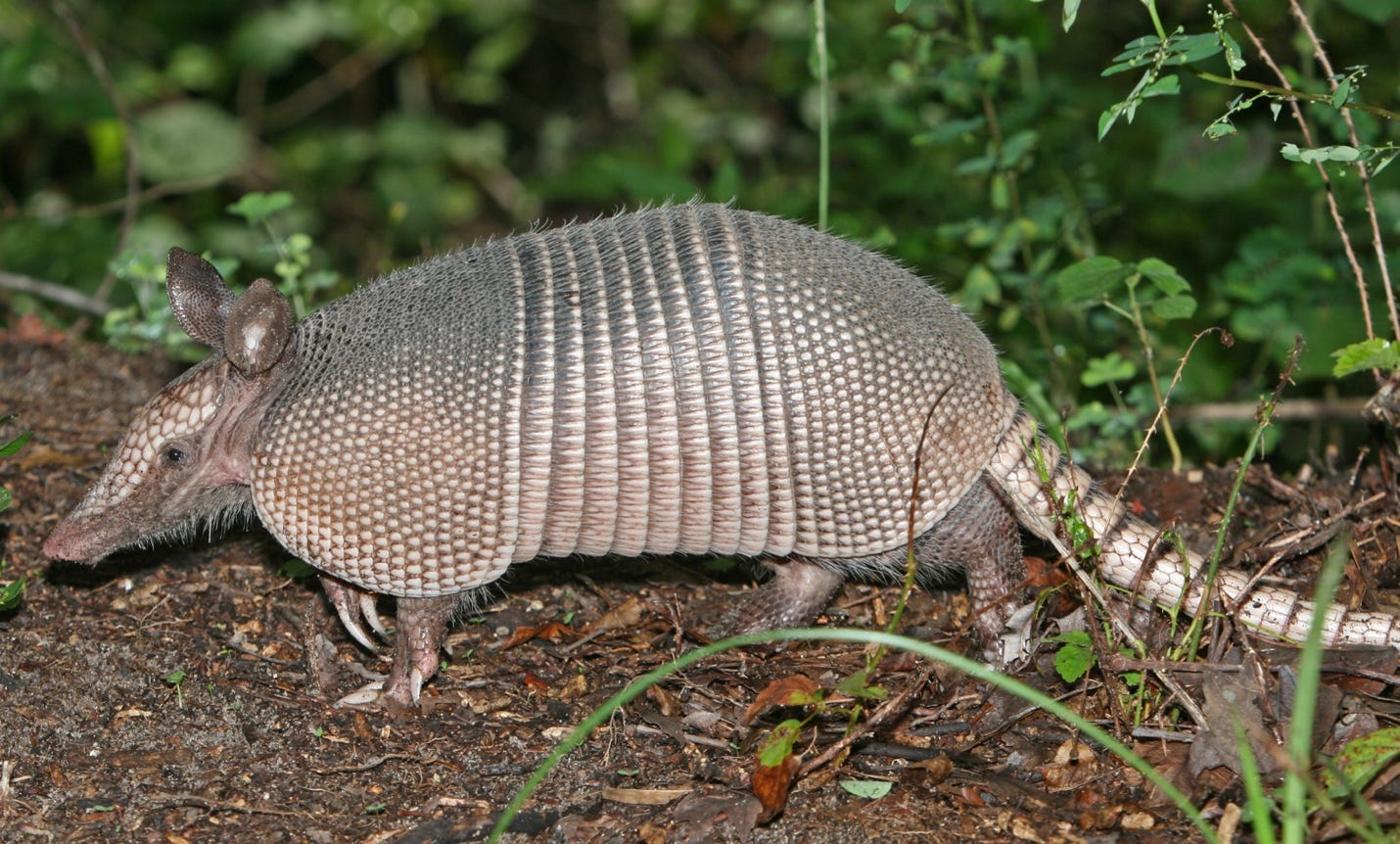
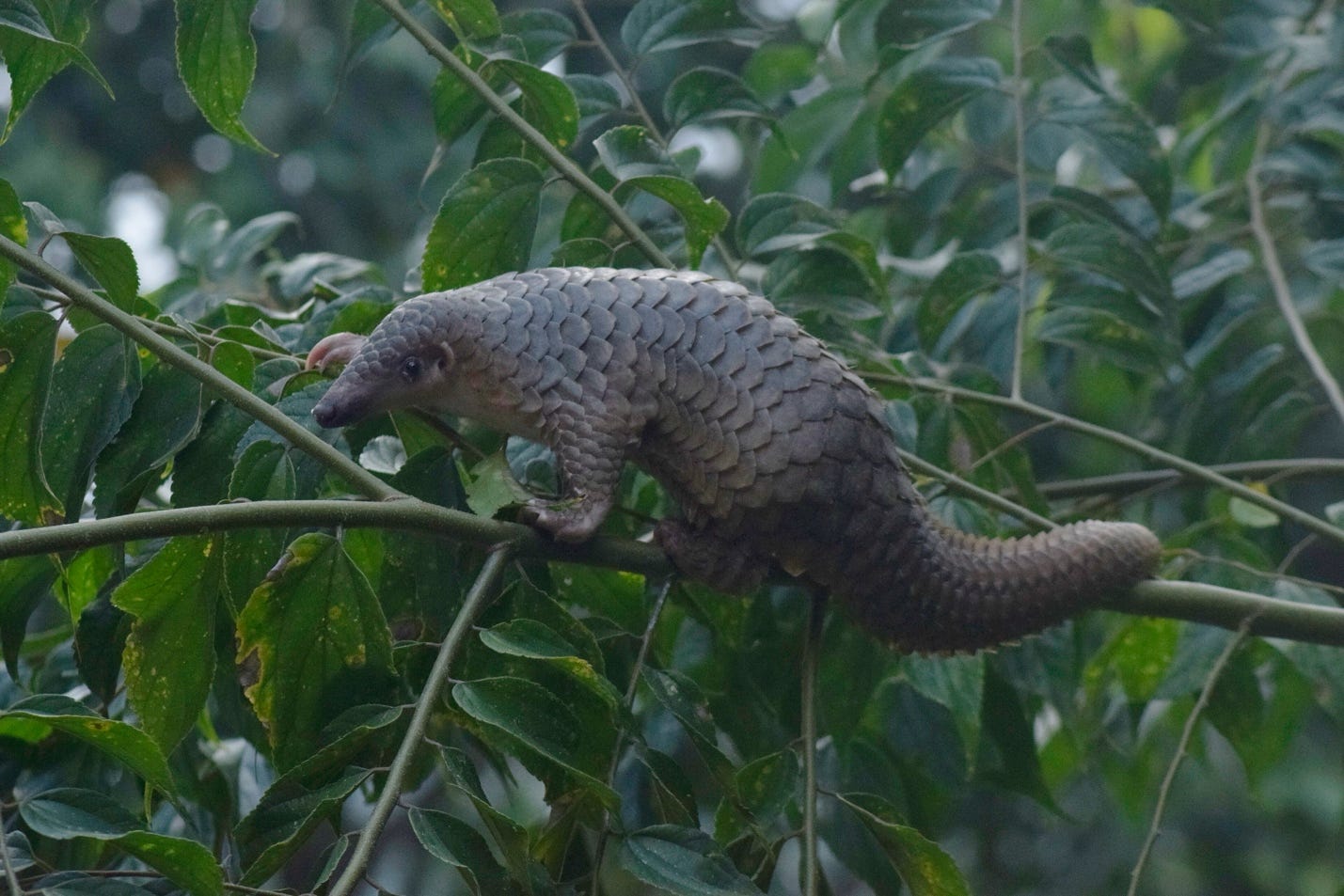
Early phylogeny was based on morphological or physical differences between animals which led to many classification errors. For example, shared morphological similarities between pangolins and armadillos such as their long snouts, ant-eating diet, and armored scale-like structures led them to be classified together in the order Edentata. In reality, pangolins are the last living members of the order Pholidota, and armadillos belong to the order Xenarthra.
Armadillo:
Pangolin:
As the field of genetics was discovered and the advent of computers improved data processing capabilities, phylogenetic trees were increasingly based on cladistics: the field of study that classifies evolutionary lineages based on characteristics shared by a common ancestor and all of its descendants. This classification is used to arrange evolutionary lineages into monophyletic groups called clades. Because modern cladistic studies largely rely on molecular data, it yields more accurate results when it comes to decoding evolutionary ancestry. Relying on monophyletic groups for classification also makes it easier to track evolutionary divergence.
Understanding evolutionary groups as clades leads to some interesting classifications that may not occur to you upon first glance. For example, modern birds are descended from dinosaurs. To create a clade that includes all of Dinosauria, one would have to include birds. Thus, birds are dinosaurs.
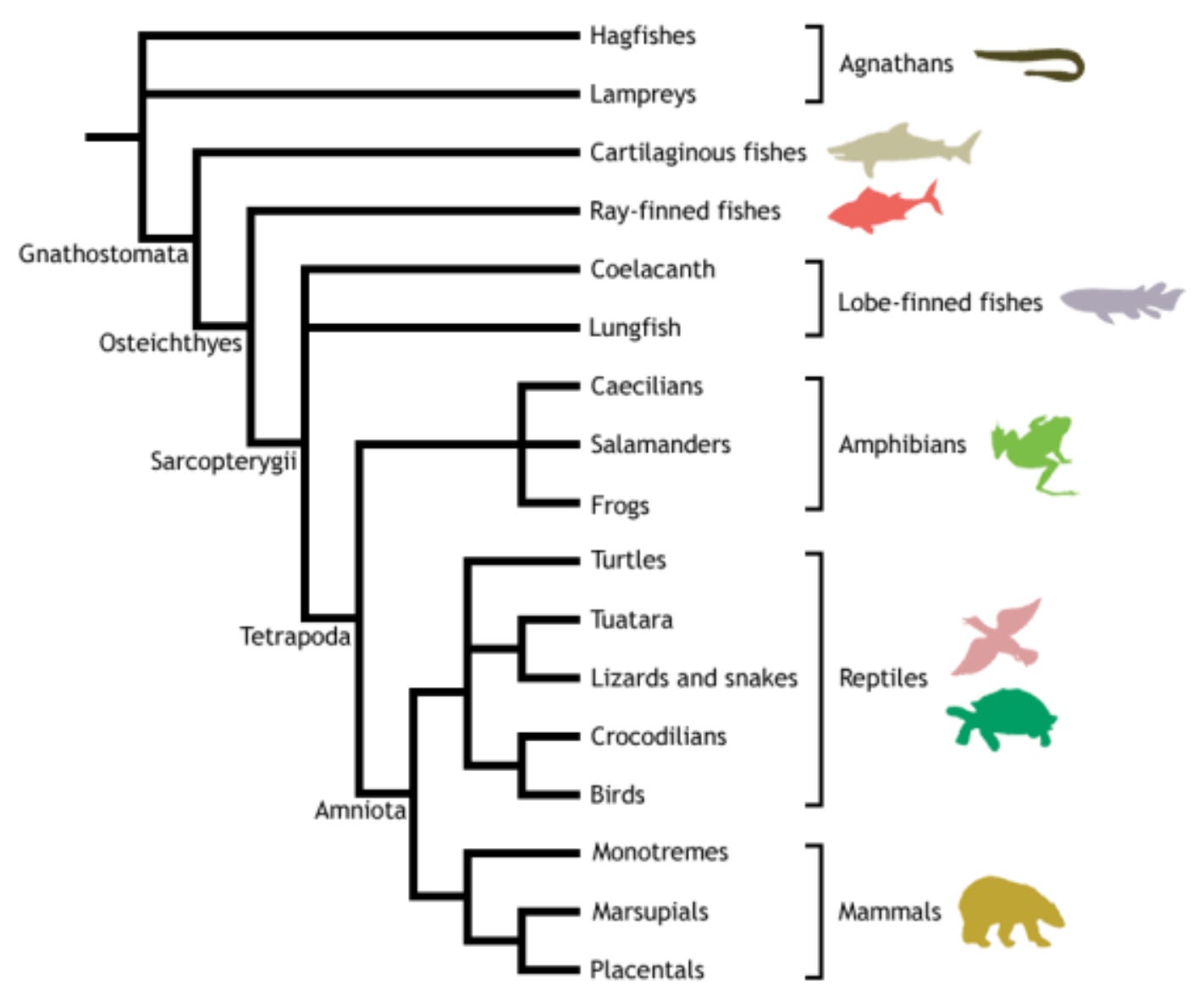
This logic can be applied to other terms as well. The word fish, for example, colloquially refers to aquatic vertebrates. This is a paraphyletic group that includes jawless fish, cartilaginous fish, and bony fish. The problem is that paraphyletic groupings are based on arbitrary perceived differences. Thus, they don’t capture the full picture of evolutionary lineages and lose value as a classification tool. From a purely cladistics perspective, because tetrapods (and thus humans) evolved from lobe-finned fish, humans must also be included in the classification of fish.