

Throughout history, women have been underrepresented in science disciplines. Despite educational and societal barriers, women have still shaped scientific discovery. In honor of Women’s History Month, I would like to highlight female scientists.
Marie Curie
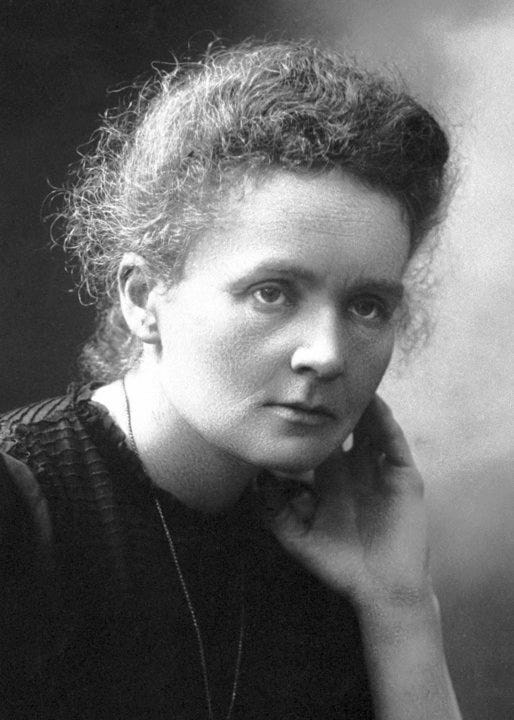
Photo from the Nobel Foundation Archive
Marie Curie was born in 1867 in Warsaw, Poland. Growing up Polish under the tsarist regime, her family was constantly in a precarious position, with her father needing to move from job to job. She attended Sorbonne University in Paris when she was 24 because the Russian Empire prohibited women from attending university. There, she did her thesis on radioactivity. Her research in radiation phenomena led to her earning the Nobel Prize in Physics in 1903 along with her husband Pierre Curie and French physicist Henri Becquerel. Her continued research in radiation led to her discoveries of polonium and radium. For these discoveries, she was awarded the 1911 Nobel Prize in Chemistry, making her both the first woman to earn a Nobel Prize and the only person to earn multiple Nobel Prizes in two different sciences.
Alice Augusta Ball
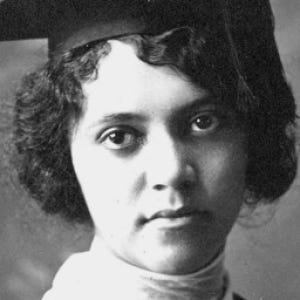
Alice Ball was born on July 24th, 1892, in Seattle, Washington. She earned two degrees at University of Washington and was the first Black woman to graduate with a degree in pharmaceutical chemistry. After graduation she published a paper in the Journal of the American Chemical Society. She received a full scholarship for the College of Hawai’i. There, she studied methods to extract active ingredients from the kava root. This research was of interest to Dr. Harry T. Hollman and Dr. Arthur Dean who were studying cures for leprosy. They wanted her to replicate what she did with kava roots to chaulmoogra oil (the existing treatment). She extracted the active ingredient within the oil to create a treatment that the human body could easily absorb. This was the first leprosy treatment which halted disease progression. This treatment saved countless lives. Unfortunately, one year after her discovery, Alice Ball fell ill and died at the age of 24. Arthur Dean published her research as his own, giving her no credit, highlighting the discrimination she faced as a Black woman in a STEM field. Her legacy was restored in the 1970s when a Hawaiian historian named Kathryn Takara found her original thesis.
Inge Lehmann
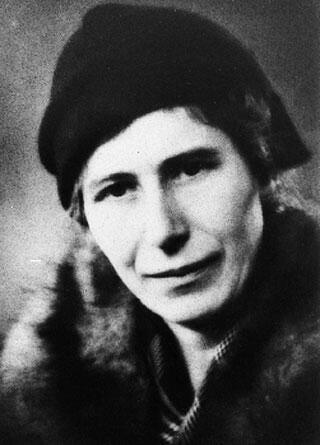
Dr. Inge Lehmann (1888-1993), discoverer of the Earth’s inner core. Photo courtesy of B.A. Bolt.
Inge Lehmann was born in Denmark in 1888. She attended a progressive school that afforded women the same education as their male counterparts. In 1929, Lehmann studied the seismic waves from an earthquake in New Zealand. She found the waves were bouncing off of some kind of invisible boundary. She theorized that the Earth’s core was separated into a solid inner core and a liquid outer core. Her hypothesis was confirmed in 1970 when more sensitive seismographs better detected waves deflecting off the solid inner core.
Rebecca Lee Crumpler
*there are no surviving pictures of Rebecca Lee Crumpler
Rebecca Lee Crumpler was born in Delaware in 1831. She grew up with her aunt who frequently cared for their sick neighbors. This inspired her to enter the medical field. In the 1850s, she moved to Massachusetts to pursue her career as a nurse. She assisted various doctors across Boston. In 1860, she became the first African American woman to enroll in the New England Female Medical College in Boston. The college was one of the only in the country that awarded medical degrees to women and allowed Black students to enroll. On March 1, 1864, she received a Doctress of Medicine at the age of 33. She was the first Black woman in the United States to receive a medical degree. After the Civil War ended, she prioritized helping newly emancipated slaves who had little access to healthcare. Despite facing extreme racism and sexism, she did not stop her work as a doctor. In 1883 she published a book called A Book of Medical Discourses based on journal notes from her years as a physician. This book is widely thought to be the first medical text written by an African American author.
These women are a reminder of how breaking barriers and improving access can result in more innovation.